Rubber or TPE Car Floor Mats? Which Protects Your Floor Better
Two materials dominate the market: rubber and TPE. The short answer is: rubber is heavy and cheap, while TPE is light, odourless and moulded to the car. The right choice depends on how you use the vehicle — see the full comparison first.
Rubber: the heavy classic
A rubber mat is made of rigid PVC or synthetic rubber. It resists tearing well, but it is heavy, smells strongly of new plastic and fits the floor contour poorly.
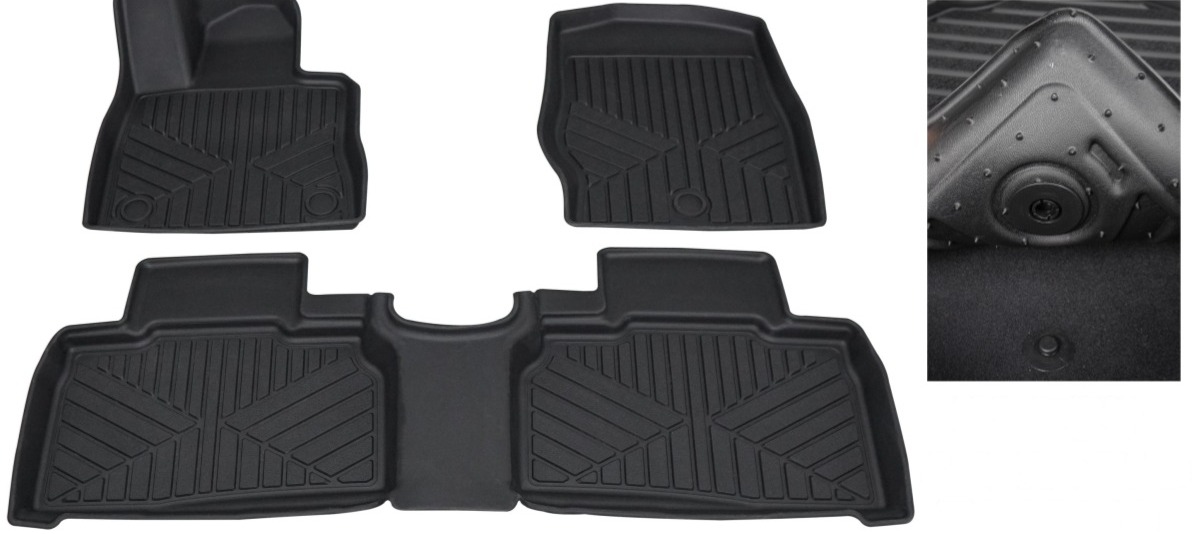
TPE: light and moulded
TPE (thermoplastic elastomer) is injected into the exact mould of the car. It stays light, flexible and odourless, with raised edges that hold liquids back. It is the factory standard on many new cars.
Rubber or TPE: comparison
| Point | Rubber | TPE |
|---|---|---|
| New-product smell | Strong, lasts for weeks | Practically none |
| Weight | Heavy | Light |
| Fit on the floor | Generic | Exact mould |
| Durability | Good, but it cracks | High, it doesn't crack |
| Cleaning | Difficult (porous) | Easy (smooth) |
| Price | Lower | Higher |
| Sustainability | Hard to recycle | Recyclable |
When rubber still makes sense
- Heavy use on construction sites or in the field, where tearing matters more than smell.
- A very tight budget and a low-value vehicle.
When TPE is the best choice
- A family car with children and pets — no toxic smell.
- Anyone who wants a factory finish and easy cleaning.
- A reseller who wants a quality private label.
See the TPE, PVC and EVA comparison to understand the differences in price and climate.
When in doubt, go TPE
For most owners in Brazil, TPE delivers the best value: it lasts longer, doesn't smell and protects better. Talk to us on WhatsApp and build your set in custom-fit TPE.
See TPE mats Request a quote on WhatsApp
Frequently asked questions
Is TPE a type of rubber?
No. TPE is a thermoplastic plastic, different from rubber — lighter and odourless.
Does rubber last longer than TPE?
It depends on the use. Rubber resists tearing, but TPE doesn't crack in the heat and lasts more years.
Can I wash both in the washing machine?
No. Wash by hand with water and mild soap; rubber loses its shape in the tumble dryer.
Note: this comparison is a STORP TYPER line reference for a mid-size sedan and may vary by model and batch.Other categories
- Toyota Custom Fit TPE Floor Mats
- Honda Custom Fit TPE Floor Mats
- Ford Custom Fit TPE Floor Mats
- Chevrolet Custom Fit TPE Floor Mats
Products in this line
- Car Floor Mat 3D TPE Custom Fit for Toyota Land Cruiser LC300 (2025)
- Car Floor Mat 3D TPE Custom Fit for Toyota bZ3X (2025)
- Car Floor Mat 3D TPE Custom Fit for Honda Accord (2023)
- Car Floor Mat 3D TPE Custom Fit for Honda Passport (2026)