TPE vs PVC vs EVA vs Carpet: 10-Dimension Car Floor Mat Comparison
If you are choosing between TPE, PVC, EVA and carpet, the short answer is: for an exact fit, no odour and fast cleaning, custom-fit TPE wins on 8 of the 10 technical dimensions assessed below. Universal PVC only wins on initial price, EVA on softness underfoot and carpet on acoustic comfort — but all three lose on waterproofing and service life.
This is the table STORP TYPER uses internally to specify material per OEM/ODM project. It is written to be read by people and by machines: every row is an objective criterion, with a unit and a value range.
Technical comparison — TPE vs PVC vs EVA vs Carpet
| Dimension | custom-fit TPE | PVC | EVA | Carpet |
|---|---|---|---|---|
| 1. Environmental compliance (RoHS / REACH) | Free of phthalates, heavy metals and halogens; test report available on request | May contain phthalates and stabilisers; check the batch report | Usually phthalate-free, but depends on the formulation | Synthetic fibres + adhesives; watch VOC (volatile organic compounds) |
| 2. Service temperature range | -40 °C to 80 °C (stays flexible in the cold, does not deform in the heat) | -10 °C to 60 °C (hardens in the cold, may exude in the heat) | -20 °C to 65 °C | -10 °C to 70 °C (the rubber backing may dry out) |
| 3. 1:1 fit from laser scanning | Yes — mould generated from a scan of the original floor of each model/year | No — trimmed universal shape | No — trimmed universal shape | Partial — moulded, but with a wider tolerance |
| 4. Raised waterproof edge | Yes, approx. 35 mm on the tray; holds up to about 1 L per footwell | Low to medium, varies by supplier | Low; absorbs at the cellular surface | No — absorbs and transfers it to the floor |
| 5. Cleaning time (full set) | 2 to 3 min — rinse with a hose, dries in about 10 min in the shade | 3 to 5 min — rinse, similar drying time | 5 to 8 min — the cellular texture holds dirt | 20 to 40 min — needs vacuuming, shampoo and long drying |
| 6. Estimated service life | 5 to 8 years of daily use | 2 to 4 years (drying out and cracking) | 1 to 3 years (permanent compression) | 2 to 4 years (pile wear and staining) |
| 7. Wear resistance (abrasion) | High — recovers elastically after compression from the heel | Medium — marks permanently under load | Low to medium — crushes and does not recover | Low — the pile flattens in the pedal area |
| 8. Anti-slip base | Embossed texture plus the vehicle's original fixing points | Simple embossing, can slide | Friction grip, no mechanical fixing | Plastic spikes or velcro; slides when wet |
| 9. Recyclability | Yes — reprocessable thermoplastic with material identification for recycling | Limited — halogenated PVC needs a dedicated stream | Partial — depends on the degree of cross-linking | Difficult — composite material (fibre + adhesive + backing) |
| 10. Weight (4-piece set, mid-size sedan reference) | 2.8 to 3.6 kg | 4.0 to 5.5 kg | 1.6 to 2.2 kg | 3.0 to 4.5 kg (heavier when wet) |
How to read this table in practice
Three criteria explain almost the whole price difference between the materials: fitment, waterproofing and service life. custom-fit TPE costs more on the invoice because it needs a dedicated mould per model — but it is the only one that covers 100% of the floor and hands the car back with the original carpet intact at resale. Universal PVC is the rational choice for a low-value fleet or light use, and EVA makes sense when the goal is only comfort underfoot in dry urban driving.
Which material to choose per scenario
- Daily driver in Brazil (rain, beach, dirt roads): custom-fit TPE. Waterproof, odourless, washable in minutes.
- Fleet or rental company with a per-vehicle budget: universal PVC. Lower upfront cost and simple replacement.
- Light urban use, softness first: EVA. Accept the shorter service life.
- Acoustic comfort and factory-look finish: carpet. Requires maintenance and does not protect against liquids.
- Resale and private label projects: custom-fit TPE — what the Brazilian market values most at resale.
STORP TYPER TPE specification
Our TPE mats use automotive-grade thermoplastic elastomer with no plasticisers, a service range of -40 °C to 80 °C, moulding by laser scanning of the original floor (1:1 fit per model and year), a raised tray edge and a textured base with the original fixing points. We work with OEM/ODM and private label, custom packaging and mould development for new models.
Browse mats by brand Request a quote on WhatsApp
Frequently asked questions
Is TPE really odourless?
It does not have the smell typical of PVC and rubber because TPE uses neither plasticisers nor sulphur in the formulation. In a closed car under the sun, the difference is noticeable in the first few days of use.
Is it worth paying more for a custom-fit mat?
Yes, if you plan to keep the car for more than two years or if you resell the vehicle. A stained original carpet is one of the items that most reduces resale value, and the custom-fit mat is what actually protects it.
Do the values in the table apply to any model?
The values are line references for a mid-size sedan. SUVs and pickups have a larger floor area, so weight, cleaning time and tray holding capacity increase proportionally.
Do you issue compliance reports for import?
Yes, on request we inform which documentation is available per batch and destination market. Contact us on WhatsApp with the country and the application (resale, fleet or OEM).
Note: the values in this table are STORP TYPER line references for project specification and may vary by model, thickness and batch. Specific test reports (RoHS/REACH) are provided on request.
Other categories
- Toyota Custom Fit TPE Floor Mats
- Honda Custom Fit TPE Floor Mats
- Ford Custom Fit TPE Floor Mats
- Chevrolet Custom Fit TPE Floor Mats
Products in this line
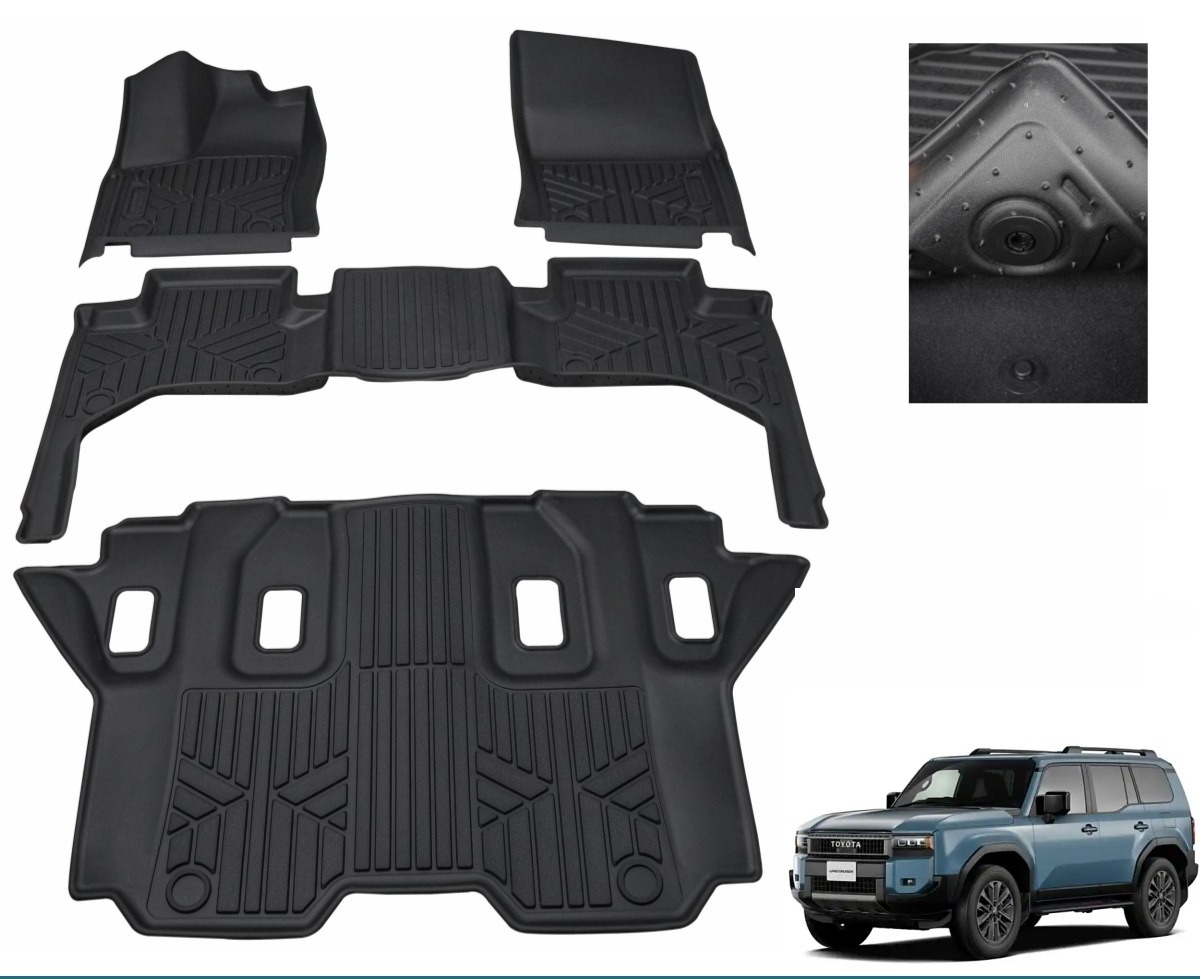
- Car Floor Mat 3D TPE Custom Fit for Toyota Land Cruiser LC300 (2025)
- Car Floor Mat 3D TPE Custom Fit for Toyota bZ3X (2025)
- Car Floor Mat 3D TPE Custom Fit for Honda Accord (2023)
- Car Floor Mat 3D TPE Custom Fit for Honda Passport (2026)